
Choosing the right food for your puppy can feel confusing. When you walk into a pet store in the USA or browse online, you may see bags labelled “all life stages dog food.” It sounds convenient, but is it really safe for a growing puppy?
In this educational guide from LuluSpot, we’ll explain whether all life stages dog food is good for puppies, what AAFCO standards mean, and how to choose the best puppy food to support healthy growth.
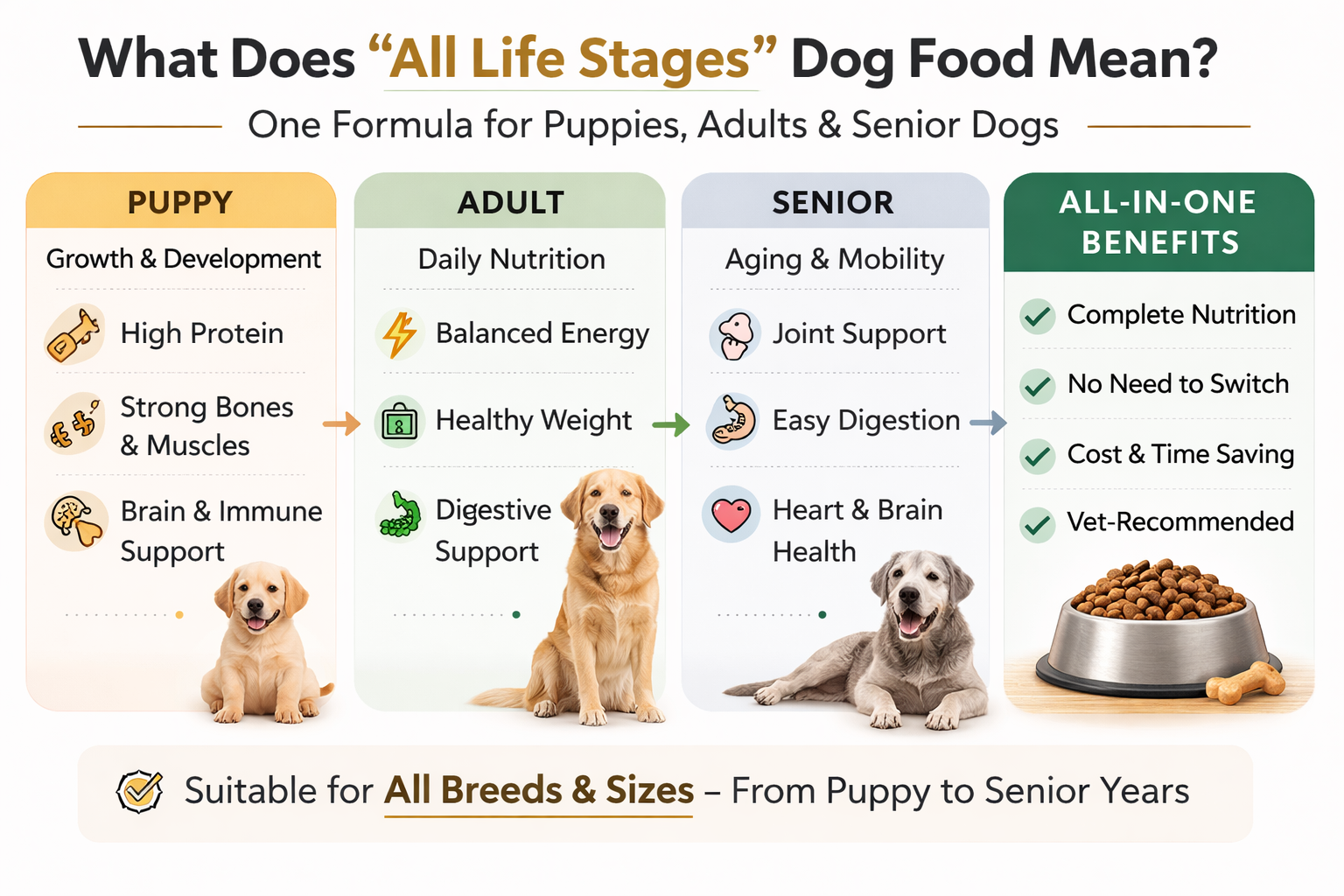
What Does “All Life Stages” Dog Food Mean?
The term “all life stages dog food” means the formula is made to feed dogs of different ages, including puppies, adult dogs, and sometimes senior dogs. But the important part is not the marketing words on the front of the bag. It is the nutrition statement on the back.
In the United States, dog food labels follow standards set by AAFCO. AAFCO stands for the Association of American Feed Control Officials. They create nutrition guidelines that pet food companies must follow.
There are two main nutrition categories you will see on a dog food label:
• Growth
• Adult maintenance
If a dog food says it is formulated for “growth” or “growth and reproduction,” it meets the nutritional requirements puppies need. If it says “adult maintenance,” it is not designed for puppies.
Some all life stages dog food meets AAFCO growth standards. That means it can legally and safely feed puppies. Others may only meet adult maintenance standards, which is not enough for proper puppy development.
Puppy Food vs All Life Stages Dog Food
| Feature | Puppy Food | All Life Stages Dog Food |
| AAFCO Standard | Growth | Growth or Maintenance |
| Designed For | Puppies only | Puppies and adult dogs |
| Protein Level | Higher | Moderate to high |
| Calorie Density | High | Often high |
| Safe for Puppies? | Yes | Only if it meets Growth standard |
The key takeaway is simple. Not all all life stages dog food is the same. Always check the AAFCO statement to see if it supports growth.
If you want to make sure you are choosing a formula that supports proper development, explore growth-approved puppy food at LuluSpot and check the nutrition statements before buying.
Nutritional Needs of Puppies in the First Year
Puppies are not just small adult dogs. Their bodies are growing fast, especially in the first 6 to 12 months. This is why they need more calories, more protein, and carefully balanced minerals.
Feeding the wrong type of food during this stage can affect bone growth, muscle development, and even brain health.
Here are the key nutrients every puppy needs.
Protein for Muscle Growth
Protein helps build muscles, tissues, skin, and a healthy immune system. Puppies need more protein than adult dogs because their bodies are developing every day.
For dry dog food in the USA, puppies generally need at least 22 percent protein. Many high-quality puppy formulas contain more.
Look for real meat like chicken, beef, lamb, or salmon listed as the first ingredient.
Fat for Energy
Puppies are very active. They run, jump, and play all day. Fat gives them the energy they need to grow and stay active.
Healthy fats also help with skin and coat health. Puppy food usually contains higher fat levels than adult maintenance food.
DHA for Brain and Eye Development
DHA is an omega-3 fatty acid. It supports brain development and vision, especially in young puppies.
Many high-quality puppy foods include DHA from fish oil. This is especially important in the first year.
Calcium and Phosphorus for Bone Growth
Calcium and phosphorus help build strong bones and teeth. But the balance matters.
Too much calcium, especially for large-breed puppies, can lead to bone and joint problems. That is why large breed puppy food has carefully controlled mineral levels.
Essential Nutrients for Puppies
| Nutrient | Why It Matters | Important for Large Breed Puppies? |
| Protein | Builds muscles and tissues | Yes |
| Fat | Provides energy | Yes |
| DHA | Supports brain and vision development | Yes |
| Calcium | Helps build strong bones | Very important |
| Phosphorus | Works with calcium for bone growth | Very important |
Large breed puppies need extra attention because their bones grow quickly, and improper nutrition can increase the risk of joint issues.
If you are unsure whether your puppy is getting the right balance of nutrients, it is safer to choose a formula specifically made for growth.
You can shop high-protein puppy food at LuluSpot and check labels carefully to ensure your puppy is getting the nutrients needed for healthy development.
Is All Life Stages Dog Food Safe for Puppies?
This is the most important question.
The short answer is yes, but only if the food meets AAFCO growth standards.
If an all life stages dog food is labelled for “growth” or “growth and reproduction,” it contains the nutrients required for puppies. In this case, it is safe for healthy puppy development.
If the label says “adult maintenance,” it is not suitable for puppies. Adult maintenance formulas do not provide enough calories, protein, or certain nutrients needed for growth.
Look for a sentence like this on the back of the bag:
“This food is formulated to meet the nutritional levels established by AAFCO Dog Food Nutrient Profiles for growth” or “for all life stages.”
If you see “growth” mentioned in that nutrition statement, the food meets puppy requirements.
When All Life Stages Dog Food Is Safe
| Label Statement | Safe for Puppies? | Reason |
| Growth | Yes | Meets puppy nutrient standards |
| Growth and Reproduction | Yes | Designed for development |
| All Life Stages (meets growth profile) | Yes | Includes puppy nutrition levels |
| Adult Maintenance | No | Not enough nutrients for growth |
Large-breed puppies need calcium levels to be carefully controlled. Some all-life-stages dog food may technically meet growth standards but still contain higher mineral levels that are not ideal for large breeds.
If you have a large breed puppy, it is safer to choose a formula specifically labelled for large breed puppy growth.
In multi-dog households, dog food for all life stages can be convenient. But you must adjust portion sizes carefully, since puppies need more calories than adult dogs.
If you want to be sure you are choosing the right formula, check AAFCO-approved puppy food at LuluSpot and read the nutrition statement before purchasing.
Pros and Cons of All Life Stages Dog Food for Puppies
All life stages dog food can be a good option in some homes. But it is not perfect for every puppy. Understanding the advantages and disadvantages will help you decide what is best for your dog.
| Pros | Cons |
| Convenient for homes with multiple dogs | May be too high in calories for some dogs |
| Can meet AAFCO growth standards | Not always tailored to breed size |
| One food for puppies and adults | Portion control becomes very important |
| Saves time and storage space | Large breed puppies may need stricter mineral control |
Many families in the USA have more than one dog. Feeding one formula to both a puppy and an adult dog is simple and practical. If the food meets growth standards, it can support a puppy’s development while still being safe for adult dogs.
It can also reduce the need to buy and store two different types of food.
All-life-stage dog food is often more calorie-dense. Puppies need extra calories, but adult dogs may gain weight if portions are not measured carefully.
For large breed puppies, the calcium level must be carefully controlled. A formula made specifically for large breed puppy growth is usually a safer option.
If you prefer a more targeted option, browse vet-recommended puppy formulas at LuluSpot and compare growth-specific recipes.
How to Choose the Best Puppy Food in the USA
Choosing the right food for your puppy does not have to be confusing. When you know what to look for, you can buy with confidence and support healthy growth.
Here are the key things to check before you buy.
Look for an AAFCO Growth Statement
Every dog food bag sold in the USA must include an AAFCO nutrition statement. This tells you whether the food is formulated for growth or adult maintenance.
Puppies need foods labeled for growth or growth and reproduction.
Check the Protein Level
Puppies need more protein than adult dogs. A good benchmark for dry puppy food is at least 22% protein.
Look for real meat as the first ingredient.
Look for DHA and Healthy Fats
DHA supports brain and eye development and Healthy fats provide energy for active puppies.
Balance of Calcium and Phosphorus
Minerals must be properly balanced, especially for large-breed puppies.
Choose Trusted Brands
Trusted brands usually provide clear ingredient information and follow strict quality standards.
Puppy Food Label Checklist
| What to Look For | Why It Matters |
| AAFCO Growth Statement | Ensures food is complete for puppies |
| Real meat as first ingredient | Higher quality protein |
| DHA or Omega-3 fats | Supports brain and eye development |
| Balanced minerals | Supports healthy bone growth |
| Feeding Guidelines | Prevents overfeeding |
If you are unsure which formula to choose, browse vet-recommended puppy food at LuluSpot to find options that meet growth standards and real nutritional needs.
When Should You Switch From Puppy Food to Adult Dog Food?
Puppies do not stay puppies forever. At some point, their growth slows down, and their nutritional needs change. The right time to switch depends on your dog’s breed and size.
| Breed Size | Recommended Switch Age |
| Small breeds | 9 to 12 months |
| Medium breeds | Around 12 months |
| Large breeds | 12 to 18 months |
Large breed puppies need extended growth support. Switching too early can affect proper bone development.
When switching, transition slowly over 7 to 10 days by mixing old and new food.
Before making the transition, compare growth-approved and adult formulas at LuluSpot to choose the right option for your dog’s size and age.
Final Thoughts
Is dog food for all life stages good for puppies? Yes, but only if it meets AAFCO growth standards. The most important step is checking the nutrition statement and understanding your puppy’s needs.
Puppies require higher protein, healthy fats, DHA, and a balanced mineral profile to grow properly. Large breed puppies need extra attention to calcium levels.
To make feeding simple and safe, explore high-quality, growth-approved puppy food at LuluSpot and choose a formula that supports healthy development from the first day home.